

🌹🎶 Standing Still with Sappho
A Cold Moon Ramble

Δέδυκε μὲν ἀ σελάννα
καὶ Πληΐαδες, μέσαι δέ
νύκτες, πάρα δ’ ἔρχετ’ ὤρα,
ἔγω δὲ μόνα κατεύδω.The moon and the Pleiades have set,
it is midnight,
time is passing,
but I sleep alone.~ Sappho (630-570BC), Fragment 48, preserved by Alexandrian grammarian Hephaestion (2nd AD) in Enchiridion de Metris. (A Handbook of Poetic Metre)
Sappho’s voice reaches us in fragments, her life story shrouded in mystery and speculation. Her story is filtered through the patriarchal sieve - acclaimed as the Tenth Muse by Plato, derided in bawdy comedies and censored by Pope Gregory VII, who commanded the burning of her works in 1073. Like so many other prominent women, she is simultaneously visible and invisible, objectified and sanctified in a web of narratives. And no wonder, because, empowered by her desire and devotion, leading women’s circles in Aphrodite rituals, Sappho declares that she would rather see Anactoria - “her lovely /step, her sparkling glance and her face than gaze on/ all the troops in Lydia in their chariots and glittering armour.” Sung to the accompaniment of a lyre, her intimate lyrical poetry was a radical departure from traditional epic stories of Gods and heroes.
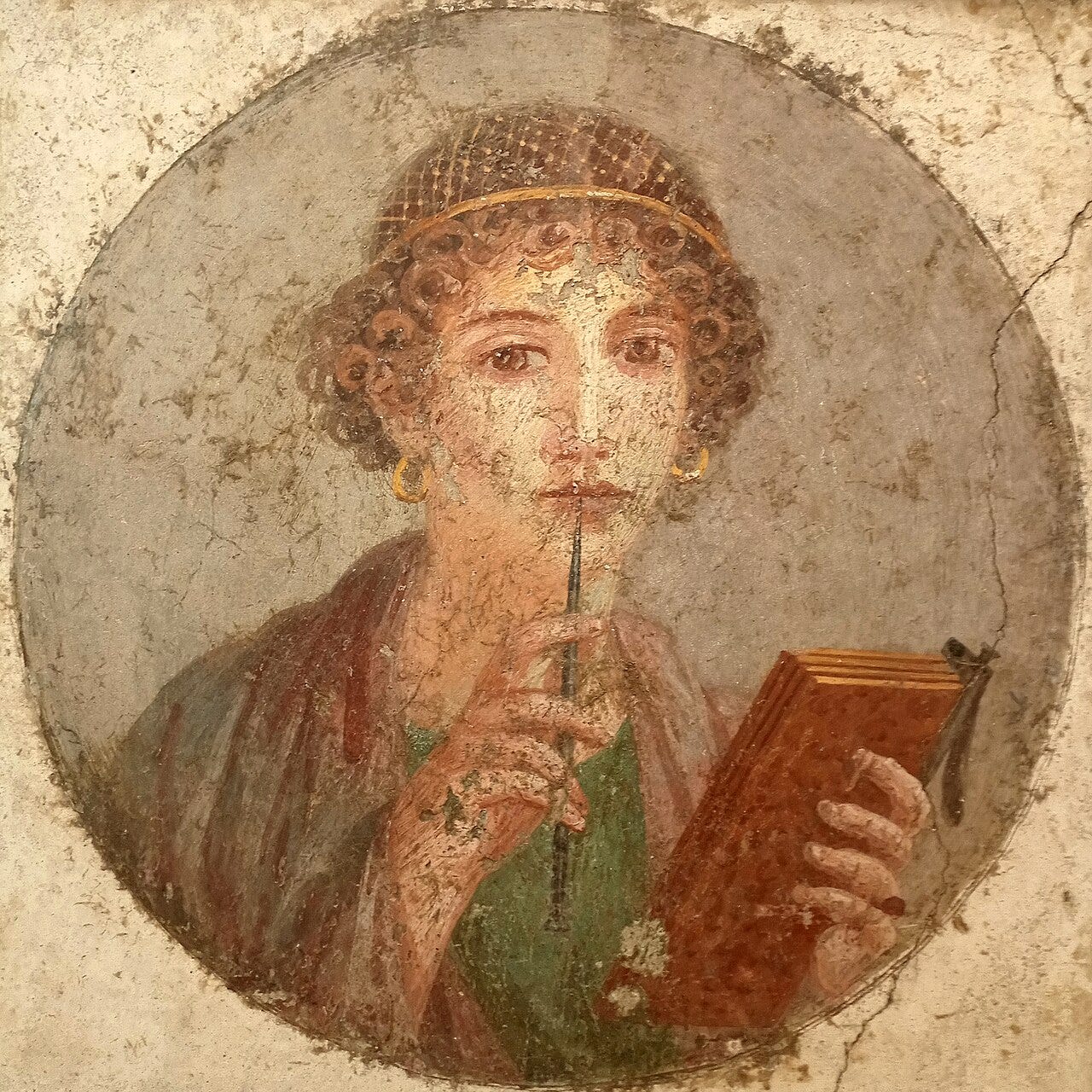
Sappho - Pompeii fresco - Wikimedia

So we find Sappho alone under the moon and stars, writing her story, singing her song. Some centuries later, tonight the almost-Full Moon glides through the hiding place of the Pleiades, seven nymph sisters turned into stars by Zeus to protect them from Orion’s pursuit. One of the lonely truths of life is that at times we will find ourselves at odds with the narratives others spin around us. Whether it’s a fraught argument with a lover or a professional misunderstanding, we can be standing together under the same moon, yet feel a million miles apart. In the digital world, our stories are increasingly mediated and fragmented by screens, generating what psychologists call ambiguous loss - a sense that people are with us, yet not fully present.
Claiming our own song and story can feel daunting amidst this cacophony - the clamour of social conditioning, the weight of professional expectations and the assumptions of loved ones can easily silence our solitary voices. Yet song and story can also act as a lifeline. A thread of moonlight connects us with Sappho; she becomes a momentary companion, telling us that she too is lonely and searching, “and longingly I long and searchingly I search...” The survival of her fragments encourages us to knit together our fragmented selves and weave a new narrative.
Sappho reminds us that there can be a greater power in “whatever you love best” than in legions of armies. The narratives surrounding her unravel to reveal the attitudes and prejudices of the authors and their times, whilst her song sings on. So as this Full Moon, swivels into a lunar stand-still, seen every 18.61 years, we too can stand still, longingly search our hearts for what we love and follow its call.
Warmly inviting you to join me at two online Song & Story Circles for creative rejuvenation and restoration at Solstice and New Year.

This is so lovely, Katie.
And your words, ‘we too can stand still, longingly search our hearts for what we love and follow its call’.
Brilliant advice indeed. Yes.